Case Study: Solar Comedones & Advanced Photoageing (70)
Solar-Induced Comedonal Congestion, Dermal Degeneration & Advanced Ageing Skin
The skin presented with severe dehydration, dryness, deep wrinkles, laxity, and widespread congestion caused by solar comedones. Decades of sun exposure had led to advanced collagen loss, thickened skin, impaired cell turnover, and blocked follicles — resulting in dullness, uneven texture, and visibly aged skin beyond chronological age.
Before

Our Approach:
This skin required reactivation, not protection.
The focus was on accelerating cell turnover, normalising keratinisation, clearing solar comedones, and stimulating collagen while restoring hydration. Avoiding exfoliation or retinoids would have worsened congestion and structural decline, so controlled stimulation was essential.
Clinic treatments focused on active correction and stimulation:
- Retinol infusions combined with collagen and hyaluronic acid to stimulate renewal and restore hydration
- Alternating fruit acid peels to accelerate exfoliation and clear solar comedones
- Treatment rotation to maintain progressive stimulation without stagnation
Accelerating epidermal turnover to restore follicular clearance
Normalising keratinisation to reduce comedone formation
Stimulating collagen synthesis to improve structural integrity
Rehydrating the skin to support enzyme-driven renewal
Homecare Strategy
Morning
- dOre Micellar Water Cleanser – Cleanses without stripping to maintain barrier tolerance during active treatment phases.
- dOre Hydrating Vitamin Mist – Restores hydration, improves skin flexibility, and supports enzymatic renewal.
- dOre Triple C Serum – Provides antioxidant protection and supports collagen repair in severely photo-damaged skin.
- dOre Collastin + C Booster – Reinforces collagen support in skin with advanced structural loss.
- dOre Firm Skin Moisturiser – Supports firmness and provides barrier comfort during daytime exposure.
- dOre Eye Complex C Cream – Supports collagen and hydration in the eye area affected by deep lines.
Evening
- dOre Micellar Water Cleanser – Maintains cleansing consistency without compromising tolerance to actives.
- dOre Hydrating Vitamin Mist – Reduces dehydration and supports overnight repair.
- dOre Skin Normalising Serum – Corrects abnormal keratinisation, stimulates turnover, and clears follicular congestion.
- dOre Collastin + C Booster – Supports collagen repair during the skin’s recovery phase.
- dOre Retin A Moisturiser – Enhances retinoid delivery and supports overnight collagen stimulation.
Weekly
- dOre Skin Polish (2–3× weekly) – Assists in clearing compacted dead skin cells and reducing solar comedone buildup.
Results (12 Weeks)
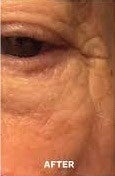
Unlike sensitive or pigment-driven cases, this skin required stimulation rather than protection. The dominant risks were stagnation, follicular blockage, and progressive structural decline. Avoiding exfoliation or retinoids would worsen congestion, accelerate ageing changes, and further impair skin function.
Daily homecare maintained consistent activation, while clinic treatments intensified correction safely over a 12-week cycle.
Professional treatments reinforced homecare, ensuring continuous cellular activation and structural support. The treatment strategy focused on functional reactivation rather than calming:
The result is:
- Reduced density of solar comedones and congestion
- Improved follicular clarity and smoother texture
- Increased hydration and skin flexibility
- Visible improvement in firmness and structural support
- Softening of deep wrinkles and improved overall skin vitality
Key takeaway:
Solar comedones are not acne — they are a sign of advanced sun damage and stalled skin function. In severely photoaged skin, controlled stimulation, exfoliation, retinoids, and collagen support are essential to restore clarity, structure, and vitality.